
- All
- Product Name
- Product Keyword
- Product Model
- Product Summary
- Product Description
- Multi Field Search
Views: 255 Author: Wanqi Publish Time: 2026-11-24 Origin: Site


Content Menu
● What Is a Liner and a Seal in Packaging?
>> Liner vs. seal: the key differences
● Why Packaging Liners Matter Beyond Leak Prevention
● Types of Cap Liners and Seals: A Buyer's Comparison
>> Pressure-sensitive liners vs. induction seal liners
>> One-piece vs. two-piece induction liners
● How Does Induction Sealing Work?
● How to Choose the Right Packaging Liner
>> 1. Describe the product before choosing the material
>> 2. Identify the actual sealing surface
>> 3. Define opening and reclosure expectations
>> 4. Match the liner to your equipment
● A Practical Sample-Validation Plan for First-Time Buyers
>> Step 1: Establish written acceptance criteria
>> Step 2: Establish a sealing window
>> Step 3: Test the complete filled package
>> Step 4: Approve a controlled specification
● Common Sealing Problems and What to Check First
● Quality, Compliance, and Supplier Evidence
● What to Include in Your Liner Quotation Request
>> 1. Is a cap liner the same as an induction seal?
>> 2. Can I use pressure-sensitive liners for liquids?
>> 3. Does every aluminum foil liner require induction equipment?
>> 4. Can one liner seal both PET and PE bottles?
>> 5. Are vented liners completely leakproof?
>> 6. Does an induction seal guarantee shelf life?
>> 7. Can a removed induction membrane be resealed by tightening the cap?
At Shantou Wanqi Packaging Material Co., Ltd., we help buyers answer a practical question: "What is a liner and a seal?" A liner is a material fitted inside a closure or across a container opening. A seal is the protective closure or barrier created when packaging components work together.
The distinction sounds simple, but choosing the wrong liner can lead to leakage, difficult opening, product deterioration, or unnecessary equipment costs.
With 35 years of experience in developing, manufacturing, and supplying high-quality sealing materials, we approach liner selection as a packaging-system decision—not simply a choice of foil or foam.
This guide explains the differences, compares common options, and shows first-time buyers how to move from a product description to a validated packaging specification.

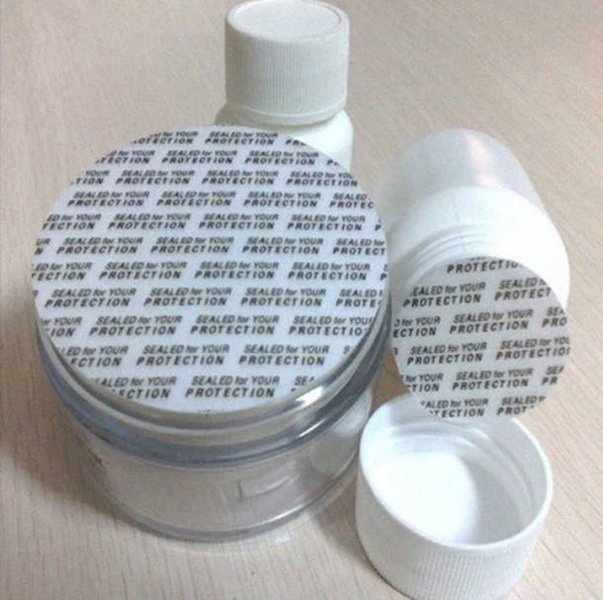
A packaging liner is an insert or multilayer material used with a cap, lid, or container opening. Depending on its construction, it may cushion the closure, create a compression seal, bond to the container rim, or support controlled venting.
Common liner materials include polyethylene foam, aluminum foil, paperboard, polymer films, adhesives, and heat-seal coatings.
The material visible to the buyer is only part of the story. The product-contact layer and bonding layer often determine whether the liner suits the application.
A packaging seal is the barrier or closure formed to restrict unwanted movement into or out of a container.
For example, a foam liner can create a seal when compressed between a cap and bottle rim. An induction liner forms a bonded membrane across the opening after electromagnetic heating activates its sealing layer.
In everyday purchasing language, "seal" can also mean the physical membrane itself.
| Question | Liner | Seal |
|---|---|---|
| What does it describe? | A packaging component | A protective barrier, closure condition, or sealing membrane |
| Where is it located? | Inside a closure or across an opening | At the interface being closed |
| How does it work? | Through compression, adhesion, heat sealing, or engineered venting | Through the performance of the complete closure system |
| Can it support reclosure? | Some constructions can | The original bonded membrane usually cannot be restored after removal |
A useful purchasing principle is this: a liner is something you specify; seal performance is something you verify.
A suitable liner can support several packaging objectives:
- Containment during storage and transportation.
- Protection against moisture or oxygen, depending on construction.
- Visible evidence that an opening has been disturbed.
- Easier opening through tabs or peelable designs.
- Reclosure performance when a suitable backing remains inside the cap.
These benefits are not interchangeable.
A leak-resistant closure is not automatically an effective oxygen barrier. A peelable membrane is not automatically child-resistant. An induction seal does not sterilize the product.
Start with the required performance, then select the liner technology.
Shantou Wanqi Packaging Material Co., Ltd. offers the following product categories. They describe different aspects of liner design, so some overlap: a liner may be aluminum-based, one-piece, induction-sealable, and easy-peel simultaneously.
| Liner category | Main purpose or feature | What buyers should confirm |
|---|---|---|
| Pressure Sensitive Seal Liners | Adhesive attachment activated by closure pressure | Dry-product suitability and application limitations |
| No-Wax Induction Seal Liners | Induction constructions without a conventional wax separation layer | Separation mechanism and backing behavior |
| Ring Peel Liners | Ring-style opening feature | Grip accessibility and peel consistency |
| Instant Coffee Seal Liners | Constructions selected for coffee packaging | Moisture protection, aroma requirements, and opening |
| Universal Induction Seal Liners | Grades intended for multiple specified substrates | Exactly which container materials are supported |
| EPE Foam Liners | Compressible expanded polyethylene cushioning | Compression recovery and product compatibility |
| Lift 'n' Peel Liners | Tab-assisted opening format | Exact construction, specifications, and naming authorization |
| One-Piece Seal Liners | A single liner assembly, typically without a separate reseal backing | First-opening protection and subsequent reclosure needs |
| Two-Piece Seal Liners | Sealing membrane combined with a separate backing | Separation quality and backing retention |
| Vented Liners | Engineered gas exchange or pressure equalization | Vent rate, liquid resistance, and chemical compatibility |
| Aluminum Foil Sealing Liners | Foil-containing barrier constructions | Bonding method and product-contact layer |
Product names alone are not specifications. Request a technical datasheet for the actual grade being quoted.
Pressure-sensitive liners do not require an induction sealer. Closure pressure brings an adhesive-coated surface into contact with the container rim.
They are generally associated with suitable dry-product applications. They should not be treated as automatic substitutes for induction seals in liquid, oily, or demanding barrier applications.
Induction liners require compatible sealing equipment and packaging components. Their heat-seal layer must match the container surface.
A one-piece induction liner generally leaves the sealing membrane on the container without providing a separate backing for the cap.
A two-piece construction combines the membrane with a backing that remains in the closure after separation.
That backing may support reclosure, but it does not recreate the original unopened seal. Evaluate first-opening integrity and post-opening performance separately.
Induction sealing uses an electromagnetic field to heat the aluminum foil layer within a suitable liner.
The basic sequence is:
1. Place the correct liner inside a compatible closure.
2. Fill the container and keep its sealing surface clean.
3. Apply the cap at a validated application torque.
4. Pass the package beneath the induction sealing head.
5. Allow the bond to cool before inspection or testing.
The heat activates the sealing layer, while the closure maintains contact between the liner and container rim.
Successful sealing depends on the relationship between pressure, heat, and exposure time. Equipment power, conveyor speed, head alignment, and package geometry all influence the result.
Increasing power alone is not a reliable solution to every sealing problem.
Tell your supplier whether the contents are powder, granules, cream, liquid, oil, or a chemically aggressive formulation.
Also identify relevant characteristics:
- Moisture or oxygen sensitivity.
- Alcohol, oil, solvent, or fragrance content.
- Filling temperature.
- Expected storage conditions.
- Potential gas generation or pressure changes.
"Suitable for cosmetics" is too broad to define compatibility.
Our application scope includes PE, PET, PP, PVC, PS, ABS, glass, ceramics, paper-based packaging, aluminum foil, and metal containers.
However, this does not mean every liner bonds directly to every listed material.
Specify the surface that the liner actually touches, including coatings or laminations. A coated metal rim and an uncoated metal rim may require different solutions.
"Universal" should mean compatible with a defined, tested substrate range—not compatible with everything.
Decide whether customers need a puncture-through membrane, clean peel, ring pull, or accessible lifting tab.
Then consider what happens after opening.
For frequently used products, cap fit and backing performance may matter throughout the product's usable life. For single-use packaging, first-opening protection may dominate.
Provide cap dimensions, container drawings, line speed, capping method, and sealing-equipment details.
A liner that works in a slow laboratory trial may behave differently on a commercial filling line. Validate the actual production arrangement before approving volume supply.
This is where a purchase becomes an engineering decision.
Agree on measurable requirements before testing:
- Acceptable leakage performance.
- Required opening behavior.
- Visual seal continuity.
- Backing retention, if applicable.
- Product-contact documentation.
- Relevant storage and distribution conditions.
Avoid relying on "looks well sealed" as the only acceptance standard.
Test combinations of application torque, sealing power, and line speed within equipment and packaging suppliers' recommended limits.
Record settings and inspect samples after adequate cooling.
The objective is a sealing window: a repeatable operating range that produces acceptable packages, rather than one isolated successful setting.
Use the actual formulation whenever practical. Water alone cannot establish compatibility with an oily cosmetic, solvent-containing chemical, or moisture-sensitive powder.
Evaluate appropriate storage orientations, transport conditions, and aging intervals. Select test methods according to product risk and applicable requirements.
Document the approved liner grade, dimensions, tolerances, container, closure, operating settings, and inspection criteria.
Revalidate when a meaningful component or process changes.
| Problem | Possible contributors | First checks |
|---|---|---|
| Partial or uneven bond | Uneven rim, poor contact, head misalignment | Container finish, cap seating, equipment alignment |
| Little or no adhesion | Incorrect sealing layer or insufficient energy | Substrate compatibility, power, speed |
| Difficult peeling | Unsuitable peel design or excessive sealing conditions | Liner grade and validated operating range |
| Leakage after shipment | Marginal bond, package deformation, formulation incompatibility | Filled-package transport and compatibility testing |
| Damaged or distorted liner | Excessive heating or unsuitable construction | Process settings and material specification |
| Poor two-piece separation | Construction mismatch or unsuitable processing | Separation design and supplier instructions |
These are troubleshooting starting points, not definitive diagnoses. Change variables systematically and retain records.
Shantou Wanqi Packaging Material Co., Ltd. reports ISO 9001 certification, a 1,000-square-meter factory, five production lines, and more than 100 customer relationships worldwide.
Our portfolio serves cosmetics, pharmaceuticals, food and beverages, alcoholic drinks, pesticides, lubricants, and chemical applications.
For buyers, these company credentials should start—not replace—technical due diligence.
Request the current certification and its scope. Review relevant specifications, traceability arrangements, inspection records, and change-control procedures.
For food packaging, confirm compliance for the intended food type, contact conditions, temperature, and duration. A general claim such as "food grade" is not enough to establish suitability for every application.
Pharmaceutical and chemical applications likewise require application-specific evaluation.
An ISO 9001 certificate concerns the quality management system; it does not independently establish that every liner is suitable for every regulated use.
To obtain a useful recommendation from Shantou Wanqi Packaging Material Co., Ltd., send:
1. Product description and relevant formulation characteristics.
2. Container material, neck drawing, and opening dimensions.
3. Cap material, dimensions, and internal retention features.
4. Filling temperature and production speed.
5. Existing sealing equipment.
6. Required opening and reclosure behavior.
7. Destination markets and documentation requirements.
8. Expected order quantity and sample-testing schedule.
Our recommendation to novice buyers is straightforward: approve the complete package, not just an attractive sample disc.
Contact Shantou Wanqi Packaging Material Co., Ltd. with your container, closure, and product details to discuss suitable liner grades and a sample-validation plan before placing a production order.
No. "Cap liner" is a broad category. An induction seal is a specific solution that uses a foil-containing liner and induction heating to bond a membrane to a compatible container opening.
Do not assume they are suitable. These liners are generally intended for appropriate dry products. Liquid applications need a specifically suitable construction supported by testing.
No. Aluminum describes a material, not the complete sealing method. Confirm whether the liner is designed for induction sealing, direct heat sealing, or another application.
Some grades support multiple substrates, but compatibility is grade-specific. Ask for the supported material list and validate each bottle-and-cap combination.
Not under all conditions. Venting balances gas movement with resistance to liquid passage. Performance depends on the membrane, formulation, orientation, pressure, and package design.
No. Shelf life depends on formulation, processing, packaging barriers, storage, and seal integrity. A suitable seal supports protection but cannot independently establish a shelf-life claim.
No. Tightening the cap does not restore the original bonded membrane. Subsequent protection depends on the closure and any remaining reseal liner.
The company profile, experience, facility size, production-line count, customer count, certification claim, and product portfolio were supplied by Shantou Wanqi Packaging Material Co., Ltd. for this article. No independent company audit, customer-review dataset, or original performance study was supplied.
The following technical sources informed the explanations and purchasing guidance. They do not constitute endorsements of Wanqi or verification of its individual products.
1. Selig Group. "Container Sealing." Definitions, liner-selection considerations, pressure-sensitive liner limitations, and substrate compatibility. [seliggroup]
2. Selig Group. "Your Technical Guide to Induction Sealing." Technical overview of liner structures, closure application, and induction sealing. [seliggroup]
3. Selig Group. "Optimize Your Cap, Liners, & Capping Process for Induction Sealing." Cap–liner–container compatibility, torque, and operating-window considerations. [seliggroup]
4. Selig Group. "FAQs & Troubleshooting." Potential causes of sealing defects, including incorrect sealing surfaces, alignment, and insufficient energy. [seliggroup]
5. Selig Group. "DELTASEAL™." An industry example explaining wax-free, two-piece separation architecture; not a specification for Wanqi products. [seliggroup]
6. U.S. Food and Drug Administration. "Determining the Regulatory Status of Components of a Food Contact Material." Component-level compliance, intended-use limitations, and supplier documentation. [fda]
7. U.S. Food and Drug Administration. "Understanding How the FDA Regulates Substances that Come into Contact with Food." Authorization pathways and intended-use safety assessment. [fda]