
Views: 236 Author: Wanqi Publish Time: 2026-11-18 Origin: Site


Content Menu
● Why Is My Pressure Sensitive Seal Liner Not Sticking? The Short Answer
● How Pressure-Sensitive Seal Liners Work
● Seven Reasons Your Pressure-Sensitive Liner Is Not Sticking
>> 1. Powder, Oil, or Moisture Covers the Container Rim
>> 2. The Closure Is Opened Too Soon
>> 3. Cap Pressure Is Inconsistent
>> 4. The Liner Is Reversed or Incorrectly Positioned
>> 5. The Cap, Liner, and Container Do Not Work Together
>> 6. The Product Is Outside the Liner's Intended Application
>> 7. The Liner's Condition or History Is Uncertain
● Pressure-Sensitive Seal Troubleshooting Table
● A Controlled Test to Find the Actual Cause
>> Step 1: Document the Existing Package
>> Step 2: Establish a Clean Control
>> Step 3: Compare Filled and Empty Packages
>> Step 4: Define Acceptance Before Testing
● Two Misleading Assumptions to Avoid
>> "A Tighter Cap Will Always Fix It"
>> "Sticking Means the Entire Package Is Validated"
● When to Consider an Induction Seal Instead
● How Shantou Wanqi Packaging Material Co., Ltd. Supports Selection
>> How long should a pressure-sensitive liner take to stick?
>> Does a pressure-sensitive liner need heat?
>> Can I use pressure-sensitive liners for oil bottles?
>> Why does the liner stay inside the cap?
>> Can a removed pressure-sensitive liner be reused?
>> Will a pressure-sensitive liner work on glass?
At Shantou Wanqi Packaging Material Co., Ltd., we approach packaging problems by examining the complete sealing system—not just the liner. If you are asking, "Why is my pressure sensitive seal liner not sticking?", start with four checks: a clean, dry container rim, correct liner placement, consistent cap pressure, and sufficient time before opening. Pressure-sensitive liners depend on these conditions to bond successfully.
With 35 years of experience in sealing-material development, manufacturing, and sales, our company provides customized solutions for different packaging applications. This guide explains how to distinguish an application problem from a liner-selection problem—and how to investigate both without relying on guesswork.

A pressure-sensitive seal liner may fail because powder, moisture, or oil prevents adhesive contact; the cap applies insufficient or uneven pressure; the liner does not fit correctly; or the package is opened before adhesion develops. Another possibility is that a conventional pressure-sensitive liner is unsuitable for the product, particularly a liquid or oily formulation. [tricorbraun]
The first question should therefore be: "Was this liner applied correctly to a suitable package?"
Replacing liners without answering that question can leave the underlying cause unresolved.
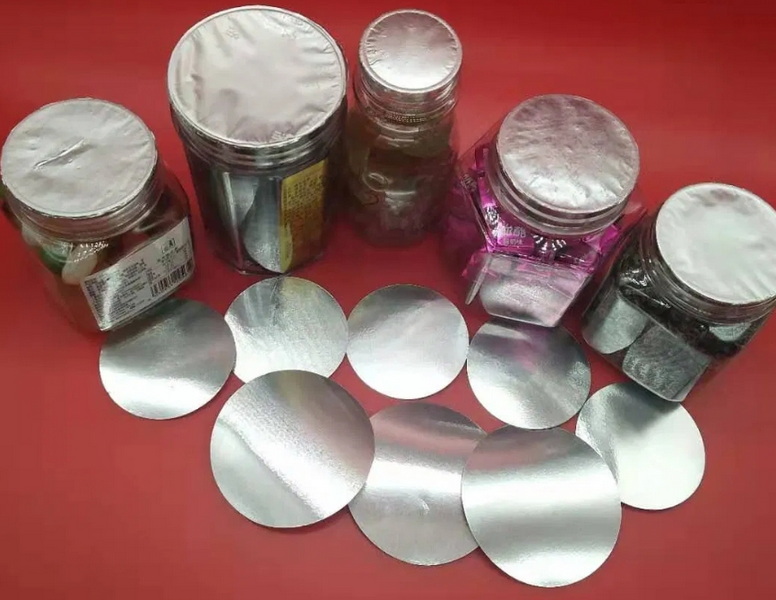
A pressure-sensitive liner has an adhesive-coated surface that contacts the container's sealing land—the flat rim surrounding the opening. Tightening the closure presses the liner against that surface. The liner should remain attached to the rim when the cap is removed after the specified holding period. No induction-sealing equipment is required.
Pressure and time work together. Packaging suppliers commonly recommend leaving the closure undisturbed for approximately 24 hours, although the instructions for the specific liner should govern your process. Opening immediately after capping is not a reliable acceptance test.
Unlike an induction liner, a conventional pressure-sensitive liner does not use an induction-heated foil layer to form its attachment. Troubleshooting should therefore begin with contact, pressure, cleanliness, and holding time—not induction-machine settings.
The adhesive needs direct contact with the sealing land. Product dust, filling splashes, oil, or condensation can interrupt that contact. Even a suitable dry product can cause problems if its powder settles on the rim during filling.
Inspect containers after filling, not only before filling. Compare the suspect package with a clean, dry control. If the control bonds but the production sample does not, investigate contamination before changing the liner specification.
Avoid touching the adhesive during inspection.
An immediate cap-removal test can make a suitable liner appear defective. Suppliers commonly specify a 12–24-hour or approximately 24-hour waiting period, depending on the product and application instructions.
Record the capping time and inspection time. Keep test containers undisturbed for the prescribed interval.
Do not repeatedly open and reclose the same sample while checking progress. Use separate containers for different inspection times so that earlier checks do not disturb later results.
The closure supplies the pressure needed to bring the adhesive into contact with the rim. Insufficient pressure can prevent attachment, while uneven application can leave part of the circumference poorly contacted.
Use the closure supplier's approved application-torque range as the starting point for validation. Do not assume that hand-tightened samples reproduce production conditions.
If failures occur intermittently, compare results by capping head, operator, shift, and closure lot. A pattern can help distinguish a machine-setting issue from a general material problem.
The adhesive side must face the container rim. For the printed liners described in TricorBraun's application guide, the printed side faces upward, toward the closure. Confirm the orientation of your particular construction rather than assuming every liner looks identical.
Check whether the liner sits flat and centrally inside the cap. Include installation photographs in the work instruction so operators can recognize a reversed, folded, or displaced liner before capping.
Adhesion requires pressure at the sealing land. A liner that does not sit correctly, or a closure-container combination that does not compress it consistently, deserves investigation even when each component appears acceptable separately.
During diagnosis, compare the liner's seating and contact pattern across the full circumference. Check dimensional specifications with all component suppliers.
Treat a change in cap design, liner thickness, bottle supplier, or neck finish as a reason to revalidate the package—not merely as a purchasing substitution.
Conventional pressure-sensitive liners are generally recommended for dry products. Oils and liquids are common reasons to reconsider this technology rather than increase cap tightness or extend the waiting period.
Some suppliers discuss selected thick products as possible applications. That does not establish compatibility with every cream, sauce, or lotion. The actual formulation and package need testing.
For liquid, oily, or demanding chemical applications, evaluate an appropriately specified alternative rather than treating pressure-sensitive adhesion as a universal solution.
Pressure-sensitive liners can lose adhesive effectiveness over time. When older inventory performs differently from a fresh reference lot, investigate age and handling history rather than assuming the container is responsible.
Request the manufacturer's shelf-life and storage instructions. Record liner lot numbers, receipt dates, and storage conditions.
Do not attempt to recover questionable stock by heating it or adding adhesive. Segregate it until the supplier has reviewed the application and material condition.
Use the following table to organize an investigation. These are diagnostic possibilities, not confirmed causes.
| Observed symptom | What to investigate first | Practical comparison |
|---|---|---|
| Liner remains completely inside the cap | Orientation, holding time, rim cleanliness, and pressure | Compare with a correctly assembled clean control |
| Only part of the rim bonds | Local contamination or uneven contact | Photograph the bonded and unbonded areas |
| Empty containers pass; filled containers fail | Product residue or formulation effects | Compare empty and filled packages under identical conditions |
| Failures cluster around one capping head | Application consistency | Track samples by head and measured settings |
| One container lot performs differently | Rim condition or component variation | Compare lots using the same caps and liners |
| Older liners perform worse than fresh stock | Material age and handling history | Run a side-by-side comparison |
The table translates the main application requirements—clean contact, pressure, time, and suitable product selection—into controlled comparisons.
A useful investigation changes one variable at a time. Otherwise, a successful retest may not reveal which adjustment solved the problem.
Record:
- Product type and formulation category.
- Container material, supplier, and neck finish.
- Cap specification and liner construction.
- Liner, closure, and container lot numbers.
- Application settings and inspection interval.
- Photographs of the failure.
Keep failed components where practical. A description such as "not sticky enough" is less useful than a photograph showing exactly where attachment failed.
Prepare clean, dry containers using the specified liner orientation and approved closure settings. Leave them undisturbed for the liner supplier's recommended holding period. These conditions reflect the basic application requirements described by packaging suppliers.
Use multiple samples. A single successful package is a starting observation, not evidence of production consistency.
Apply the same cap, liner, settings, and waiting period to both groups.
If only filled containers fail, focus the next investigation on filling contamination, product contact, and formulation suitability. If both groups fail, investigate the component combination and application conditions first.
This comparison does not prove compatibility; it narrows the next question.
Create a written inspection method. Specify when the cap is removed, what constitutes complete circumferential attachment, and how partial adhesion is recorded.
Adhesion alone should not be treated as proof of liquid-tightness, barrier performance, or suitability for a regulated application. Conventional pressure-sensitive liners have application limitations, particularly with liquids.
Pressure matters, but it cannot remove oil, correct reversed installation, or make an unsuitable product compatible. Investigate those conditions before changing torque.
Any torque adjustment should remain within the component suppliers' recommendations and be verified on the actual package.
A liner remaining on the rim answers an adhesion question. It does not independently establish every protection claim a brand may wish to make.
Define the intended function first: opening cleanliness, product retention, moisture protection, leakage resistance, or another requirement. Then agree on appropriate evidence and testing rather than using visible attachment as a substitute for validation.
Pressure-sensitive liners offer equipment-free application for suitable dry-product packages. Induction liners use a different sealing process and may be more appropriate when the application requires capabilities beyond a conventional pressure-sensitive liner. Neither option should be selected without checking the actual product-container combination.
Do not confuse their troubleshooting procedures. Induction sealing introduces additional variables, including power, line speed, sealing-head position, and sealant compatibility. Those variables do not explain a conventional pressure-sensitive liner's failure to adhere.
Shantou Wanqi Packaging Material Co., Ltd. combines 35 years of industry experience with ISO 9001-certified quality management. Our 1,000-square-meter factory operates five production lines, serving more than 100 customers worldwide.
Our portfolio includes pressure-sensitive liners, no-wax induction liners, ring peel liners, instant coffee liners, universal induction liners, EPE foam liners, lift-and-peel liners, one-piece and two-piece liners, vented liners, and aluminum foil sealing liners.
We serve cosmetics, pharmaceuticals, food and beverages, alcoholic beverages, pesticides, lubricants, and chemical applications. Across our product range, we support solutions for multiple container materials, including PE, PET, PP, glass, and metal. This does not mean every liner suits every material or formulation; selection must remain application-specific.
Send us your product details, container and closure specifications, liner dimensions, application conditions, and failure photographs. These details provide a practical starting point for selecting samples and planning compatibility trials.
Many suppliers recommend approximately 24 hours with the cap left in place. Follow your specific liner's instructions and avoid opening samples prematurely.
No. Conventional pressure-sensitive liners rely on closure pressure and adhesive contact, not an induction-heating process.
Conventional versions are generally not recommended for oils or liquid products. Discuss an application-appropriate alternative with your supplier.
Possible reasons include premature opening, incorrect orientation, rim contamination, or inadequate pressure. Compare the failed package with a clean, correctly assembled control.
These liners are intended for one-time application. Do not rely on a removed liner to reproduce its original attachment or protection.
Suitable versions can be used with glass and plastic containers, particularly for dry products. Confirm compatibility with the specific liner, container finish, closure, and contents.