
- All
- Product Name
- Product Keyword
- Product Model
- Product Summary
- Product Description
- Multi Field Search
Views: 227 Author: Wanqi Publish Time: 2026-11-25 Origin: Site


Content Menu
● Pressure Sensitive Seal Liner vs. Induction Foil Seal: The Essential Difference
● Why Dry Food Packaging Still Needs Barrier Protection
● When a Pressure-Sensitive Liner Makes Sense
>> A practical option for suitable dry products
>> Understand the limitations before ordering
● When an Induction Foil Seal Is the Better Starting Point
>> Applications needing stronger initial package integrity
>> A foil membrane does not validate the entire package
● Container Compatibility: Why the Sealant Layer Matters
● A Six-Step Validation Plan for Dry Food Seal Liners
>> 1. Define the acceptance criteria
>> 2. Test production-representative components
>> 3. Challenge normal filling conditions
>> 4. Establish the operating window
>> 5. Inspect and test integrity
>> 6. Confirm performance through storage and distribution
● Compare Total Packaging Cost, Not Just Liner Price
● Food-Contact Compliance: What Buyers Should Verify
● How Wanqi Supports Liner Selection
>> 1. Which liner is better for dry food packaging?
>> 2. Do pressure-sensitive liners need heat?
>> 3. Are pressure-sensitive liners airtight?
>> 4. Can an induction foil liner seal both PET and glass?
>> 5. Does induction sealing automatically extend shelf life?
>> 6. Can customers reclose the package after removing the membrane?
At Shantou Wanqi Packaging Material Co., Ltd., we approach the question of "Pressure Sensitive Seal Liner vs. Induction Foil Seal for Dry Food Packaging" by starting with the food—not simply the liner price. The right choice depends on moisture sensitivity, oxygen exposure, container compatibility, opening experience, and production conditions.
With 35 years of experience in sealing-material development, manufacturing, and sales, we help packaging buyers evaluate these requirements together. Our company operates a 1,000-square-meter factory with five production lines, serves more than 100 customers worldwide, and maintains ISO 9001 certification, according to our company information.
Our practical recommendation is straightforward: consider pressure-sensitive liners for suitable dry products needing a simple initial closure seal. Choose a properly specified and validated induction foil seal when stronger package integrity, moisture protection, or visible evidence of first opening is required. Neither option should be selected without testing the complete package.

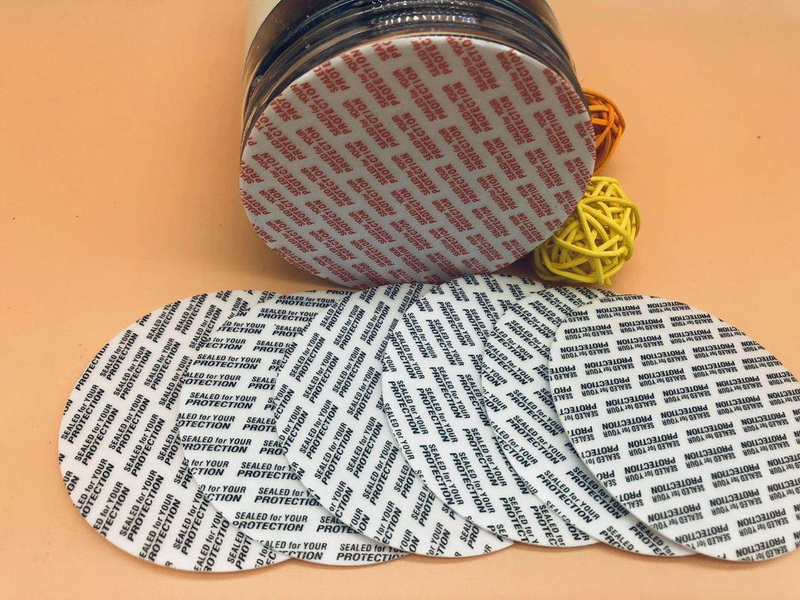
A pressure-sensitive liner typically uses a foam-based structure with an adhesive surface. Tightening the cap presses the adhesive against the container rim. It requires no induction heating equipment and provides a single-use initial seal rather than a resealable membrane.
An induction foil seal incorporates aluminum foil and a heat-seal layer. An induction machine heats the foil through an electromagnetic field, allowing the sealant to bond to a compatible container rim. Correct material selection, cap application, and processing conditions are essential.
| Selection factor | Pressure-sensitive liner | Induction foil seal |
|---|---|---|
| Activation | Cap pressure and adhesive contact | Induction heating and compatible sealant |
| Equipment | No induction sealer required | Requires suitable induction equipment |
| Typical role | Initial seal for appropriate dry products | Bonded membrane for validated package protection |
| Moisture and oxygen control | Not equivalent to a hermetic induction seal | Strong potential at the sealed opening; package validation remains necessary |
| First-opening evidence | Should not automatically be treated as reliable tamper evidence | Can provide visible evidence when the bonded membrane is disturbed |
| Reclosing after opening | Depends on the cap system | Depends on the cap and any retained backing liner |
These distinctions describe typical systems, not guaranteed performance for every commercial liner. Construction and application conditions still matter.
"Dry" does not mean unaffected by its environment. When evaluating a package, we separate three questions: does the food need protection from humidity, oxygen, or both?
A dust cover and a validated barrier seal perform different jobs. Industry guidance specifically distinguishes pressure-sensitive liners from induction seals where airtightness and protection against oxygen or moisture transmission are required.
For packaging development, assess:
- The product's acceptable moisture and quality limits.
- Expected storage duration and distribution conditions.
- Whether aroma, texture, appearance, or flowability could change.
- How the consumer will store the product after opening.
Our recommendation is to define measurable product acceptance criteria before requesting liner quotations. Without those criteria, "better sealing" remains a subjective claim rather than a purchase specification.
Pressure-sensitive liners are used for products such as dry foods and powders. Their main operational advantage is straightforward application without an induction heating step.
They deserve consideration when a buyer needs a simple initial seal and has evidence that the complete package meets the intended storage and distribution requirements.
For a small production operation, avoiding induction equipment may simplify implementation. However, that convenience should not replace a shelf-life assessment.
We would not position a conventional pressure-sensitive liner as a substitute for a validated hermetic induction seal. Equipment manufacturer Enercon describes these liners primarily as dust covers for dry capped products and advises against relying on them where airtightness or tamper evidence is required.
Adhesion also varies between container materials and application conditions. A successful sample on one jar does not establish suitability for every jar with the same nominal diameter.
For this reason, ask the supplier to specify the compatible container, application conditions, and any recommended waiting period before evaluating adhesion.
Induction sealing is generally the better starting point when the package specification calls for a bonded membrane and stronger control at the container opening. It is widely used to support freshness protection and visible evidence of first opening.
For moisture-sensitive powders, premium coffee, or products distributed through demanding shipping routes, our recommendation is to evaluate induction sealing early rather than attempt to solve inadequate protection after launch.
That is a selection recommendation—not a promise of a particular shelf life.
An apparently intact membrane is not enough to establish acceptable package performance. The liner, container, closure, and sealing process must be evaluated together under representative conditions.
Avoid claiming that a liner "guarantees 24 months of freshness" unless finished-product stability testing supports that statement.
Likewise, a successful initial seal does not establish protection after opening. Reclosure performance needs separate consideration.
One common purchasing mistake is treating all induction foil liners as interchangeable.
The critical relationship is between the liner's heat-seal layer and the container surface. Incompatible materials can produce poor adhesion or complete failure even when additional heating is applied.
At Wanqi, our broader sealing-material portfolio addresses applications involving PE, PET, PP, PVC, PS, ABS, glass, ceramics, paper, aluminum foil, and metal packaging. This breadth does not mean that one liner construction works on every substrate.
For each project, provide:
1. The exact container material and supplier.
2. Neck-finish dimensions and sealing-land details.
3. Cap material, design, and application method.
4. Product composition and filling conditions.
5. Target market and expected storage environment.
A "universal" product name should never replace compatibility testing on the actual container.
Start with the finished food. Specify acceptable appearance, aroma, texture, moisture condition, opening experience, and intended shelf life.
Then identify which package tests will demonstrate those requirements.
Use actual containers, caps, liners, and filled product. Packaging guidance recommends testing the container, closure, sealing process, and product together before commercial use.
Include samples representative of routine manufacturing, not only carefully prepared laboratory packs.
For powder applications, build rim cleanliness into the trial plan. Record whether product deposits coincide with incomplete bonding or other defects rather than assuming every failure comes from the liner.
For induction sealing, document the successful combinations of cap application, equipment settings, conveyor speed, and cooling conditions. For pressure-sensitive systems, document the supplier's application requirements.
Change one variable at a time during troubleshooting.
Visual inspection should be followed by an appropriate integrity or leak-testing method. Testing must suit the container, product, and failure mode; there is no single universal test that validates every package.
Also evaluate opening consistency and membrane removal.
Retain samples, expose representative packs to planned distribution conditions, and compare the food against the original acceptance criteria.
Recheck the package after changes to the container, closure, liner construction, or manufacturing process.
A useful purchasing comparison includes more than the price per thousand liners.
We recommend calculating:
Total packaging cost = liner cost + equipment allocation + operating cost + inspection and rejects + expected failure-related cost.
Pressure-sensitive liners avoid induction equipment, while induction systems add a machine and associated process requirements. Those differences are real, but they do not establish which option is cheaper for a particular business.
For illustration, compare:
- A local seasoning packer with short distribution cycles and a validated, relatively undemanding package specification.
- An exporter of a moisture-sensitive powder with a longer distribution route and stricter integrity requirements.
These are decision scenarios, not reported Wanqi customer cases. Their purpose is to show why identical liner-price targets can lead to different technical choices.
ISO 9001 certification and food-contact suitability answer different purchasing questions. A quality-management certificate should not replace evidence supporting the intended food-contact use.
The FDA explains that the regulatory status of a food-contact material depends on its individual substances and their applicable authorizations, specifications, and limitations. Manufacturers remain responsible for compliance.
Request documentation identifying:
- The exact liner construction.
- The intended food type and contact conditions.
- The applicable regulatory basis.
- Supporting testing or compliance statements.
- Traceability and material-change procedures.
Avoid accepting a general "FDA-approved liner" claim without checking what, specifically, supports it.
Our product portfolio includes pressure-sensitive, no-wax induction, ring-peel, instant-coffee, universal induction, EPE foam, Lift 'n' Peel-style, one-piece, two-piece, vented, and aluminum foil sealing liners, based on our company information.
Our preferred consultation sequence is application first, construction second, samples third, and production validation last.
Send Shantou Wanqi Packaging Material Co., Ltd. your container and cap specifications, dry food description, target shelf life, sales market, and line conditions. Request suitable liner samples and a comparison plan so your team can make a documented selection before committing to volume production.
Neither is universally best. Pressure-sensitive liners suit selected dry-product applications with limited sealing demands. Induction foil is generally the stronger starting point when validated integrity and protection at the opening are priorities.
No. Conventional pressure-sensitive liners rely on adhesive contact and cap pressure rather than induction heating. Follow the specific supplier's application instructions.
Conventional pressure-sensitive liners should not be treated as hermetic seals. Industry guidance distinguishes them from induction seals for applications requiring airtightness and moisture or oxygen protection.
Only if the selected construction is suitable for each application and testing confirms performance. Compatibility depends on the sealant-to-container relationship, not simply the presence of aluminum foil.
No specific extension should be assumed. Induction sealing can improve protection at the opening, but a shelf-life claim needs evidence from the finished product and complete package.
They can generally replace the cap, but the original membrane seal is not restored. Evaluate the closure and any retained backing liner separately when after-opening protection matters.
- Shantou Wanqi Packaging Material Co., Ltd. Company background and product information supplied for this article. No company website, customer-review originals, or supporting certification files were provided.
- Enercon Industries. ["Why Packagers are Moving Away from Pressure-Sensitive Liners."] Technical comparison of pressure-sensitive and induction sealing applications.
- MJS Packaging. ["Closure Liner Guide."] Overview of liner structures, uses, and initial-seal characteristics.
- SKS Science. ["Induction Sealer How-to."] Induction sealing principles, equipment considerations, and compatibility testing.
- Enercon Industries. ["Troubleshooting Induction Seals: Container & Liner Material."] Guidance on seal-layer and container compatibility.
- Adeneli Packaging. ["How Do I Test Whether an Induction Seal Is Working Correctly?"] Practical inspection and package-integrity testing guidance.
- U.S. Food and Drug Administration. ["How FDA Regulates Substances that Come into Contact with Food."] Food-contact authorization framework.
- U.S. Food and Drug Administration. ["Determining the Regulatory Status of Components of a Food Contact Material."] Component-level compliance responsibilities.
- The Cary Company. ["48mm Foil Pressure Sensitive Liner."] Product-specific example of pressure-sensitive liner construction and application limitations.